Welcome
Whole Human Therapy for Individuals & Relationships
The beginning is always today.
— Mary Wollstonecraft
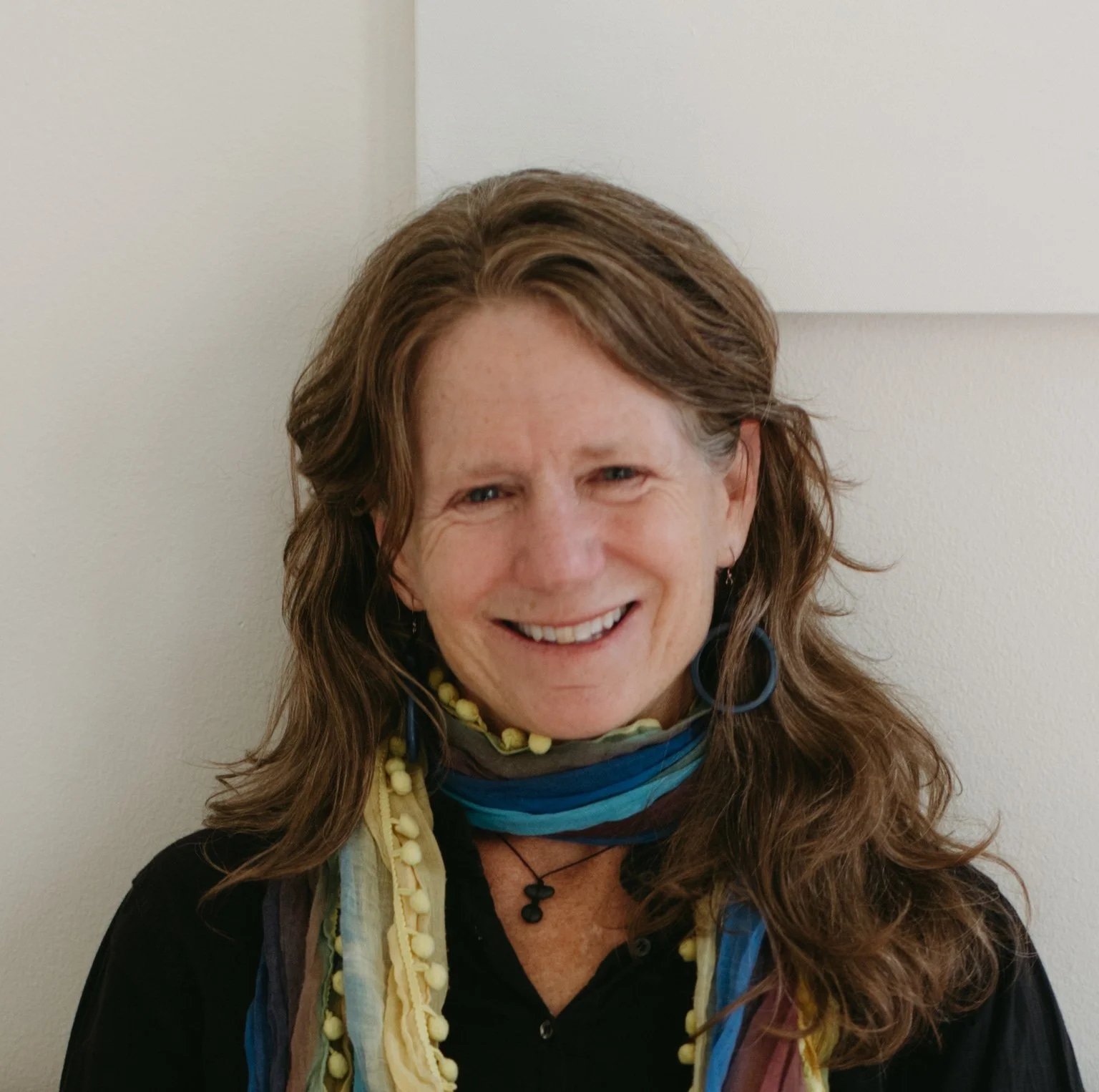
I’m glad you found your way here.
Deciding to explore therapy often comes at a difficult time, and finding the right therapist can feel daunting when every website starts to sound the same. I hope these pages give you some sense of who I am, how I practice, and how I might support you.
A conversation helps even more. I offer a free of charge 30-minute initial consultation — time enough to get a feel for how I work and ask questions without pressure.
Whole Human Therapy
We bring our whole selves to therapy, so the concerns we address are often interconnected.
Perhaps you're struggling in ways that leave you feeling disconnected — from yourself, from others. Life transitions, grief, and loss can stir up old and new difficulties in family and relational dynamics.
You might feel ready for change, but unsure how to begin.
You may wish to:
Communicate better and build deeper connection and intimacy.
Find new ways to work with overwhelming life circumstances, anxiety, and depression.
Make sense of a loss whether clear or hard to grasp, that raises questions of meaning, values, and purpose
Whatever brings you here, I welcome you.
I am interested in exploring with you the unique challenges you want to work through and the strengths you want to build. Above all, my commitment is to listen to you and to stay attuned to your needs as you grow into a fuller range of self expression and vitality.
You deserve to be heard.
I work with individuals (11+) and relationships in many forms — partners, parents, families, and core people — navigating a wide range of issues. Please learn more here.
My practice is integrative, approaching the mind and body as one whole. This view also holds that we are interconnected, relational beings, shaped by — and shaping — the contexts in which we live, and that we hurt, as well as grow and heal, in and through relationships. I pay close attention to the interplay between the narratives we live by and how we move through all of our worlds, always in a body — an aspect talk therapy often leaves aside. To learn more about the interdisciplinary research and therapies that inform my approach and philosophy, please go to my therapy with me page and the areas of focus section on this page. I invite you to explore all of the pages of this website and to get in touch for a conversation if you wish.
Areas of Focus
-
"Grief is a solitary journey that we cannot do alone." — Francis Weller
Loss can be disorienting and overwhelming. And it often awakens other losses. Yet, modern secular life has stripped away much of the ritual and meaning that once created the space and time to make sense of, and adequately mourn loss in all its forms, including often the loss of life itself.
Buddhist, Existential and other currents of thought hold the notion that with each and every breath, and each moment, exists an ending — a tiny death— as well as a kernel of something new being born. Whether you are grappling with a significant loss or navigating the ending of one chapter and the beginning of another, I offer a safe space to process your experience.
Together, we can explore your paths forward and support your needs.
Talk therapy alone often comes up short. Integrating the head, heart, and whole body simply means we attend to meaning making in multiple forms — “somatic” or body based work might look like:
mindfulness practices such as learning to notice and use the breath and body to support compassion, acceptance, centering and letting go.
learning ways to listen and expand understanding of the nervous system.
-
Existential Therapy — Orientation & Approach (to learn more about my approach and philosophy go here.
Finding our way toward acceptance and growth — and holding both at once — takes patience. For many of us, this doesn't come easily. Anxiety and depression can often stem from a loss of meaning and purpose, and from uncertainty about what comes next.
An existential lens supports an exploration of your desires and aspirations, guiding you toward clarity of purpose. Therapy from this lens offers a trusting, attuned relational process that therapist and client create together. From that relational space, we often find more room to see our patterns clearly, and to move with a greater sense of play, lightness, and creativity — toward new options and choices, and a greater sense of agency in our lives.
Like many therapeutic traditions in the humanistic, relational realm, this approach pays particular attention to being in the world as a situated being — within larger cultural, political, historical, and ecological environments.
Existential therapy Includes
A rejection of the mind-body split so predominant in Western thought.
A shift away from a "true self" — a self that is originally fixed or permanent — and toward a self "in the making," always forming and in a process of becoming.
An orientation toward interconnectedness within all beings and the world. Being "at home" in the world is an ongoing practice of living with the tensions of being human, within "both/and" complexity — finding resonance with perspectives that move beyond dualisms like individual/community and self/other, toward more relational worldviews.
This orientation also supports
Strengthening inner wisdom and listening, values clarification, and action aligned with your core values.
Opening up possibilities and spaciousness as ways of relating to the nature of being.
An active stance in the present as “future” oriented. Living with the possibility of choice in response, in movement, and with a larger sense of where one has and can creative more agency in the world, despite seemingly insurmountable barriers.
-
My training in an integrative somatic trauma therapy informed model has deepened my understanding and approach to attachment as a system that includes nature, land and place, relationships to time and culture, and a broadened understanding of historical and ancestral legacies.
This view is grounded in research and theoretical work that has expanded attachment therapeutic possibilities by including important facets not previously considered, such as cultural influences, and attachment as growth-oriented, thus changeable and contextual throughout the lifespan.
Attachment is fundamental to our secure functioning in the world, yet the idea of being "securely attached" has been defined narrowly in the field of psychology — rooted squarely within the mother-child dyadic relationship, later extending to the "caregiver," with implications that one's attachment is a "fixed" and enduring style, created as an early-life template determining relational life outcomes.
Taking into account the larger forces that exist beyond — yet deeply influence — the dyadic relationship or family system— includes the often-invisible wounding of racism, and human displacement due to war, poverty, climate, and other environmental crises, current or past.
A more expansive attachment conceptualization includes healing practices that engage the body, nature, land and place, relationships to time and culture, and a broadened understanding of historical and ancestral legacies. This reconceptualization holds possibility for the therapeutic relationship and the larger project of human flourishing and possibilities of deeper connections with oneself and in the world.
We can learn to relate to ourselves, others, and our world in different ways — through many kinds of relationships and in many relational configurations, therapy being just one. Therapy can be a starting place for creating safety as well as a safe place to explore and expand upon relational safety practiced there — a “nest”, a “lab” and “practice and play” space — choose the metaphor most supportive to your path and wishes for what most needs tending in your life.
I am particularly indebted to learning with trauma therapists experts in brain-and body-based modalities, Linda Thai and Deb Dana, specifically their training that incorporates the interplay between interpersonal neuroscience and the nervous system, complex developmental trauma, attachment and cultural shaping.
Integrative Somatic (“Body Based”) Trauma Therapy
While we live and move through our days inside bodies, for many of us the body can be an unknown entity, a source of deep or chronic pain and scary.
Our physical body — how we move in the world — is shaped by our experience and memory, our past and present. Yet, we are often “in our heads” disconnected from the rest of our body in many forms of “talk therapy”. An embodied, or somatic approach to therapy, takes the view that our bodies hold important information and we can learn to listen to our whole being, along with the meaning making with do with language and cognition. Using our present sense awareness, and all of our senses, offers us more access to what is already here for us.
My professional training includes recent work in interpersonal neurobiology such as Polyvagal Therapy, which supports attachment repair in connection with the nervous system understanding.
Internal Family Systems (IFS), Sensorimotor, Eye Movement Desensitization and Reprocessing (EMDR), Lifespan Integration, Mindfulness and Mindful Self Compassion also work with understanding how our stories “live” in the body and the mind, and each offers ways of integrating in support of as whole human healing.
I utilize my training in these therapies as we work with your identified needs.
-
Together, we slow things down, get curious about the patterns, and build strategies that create more freedom, not more pressure.
You might be working with long-standing symptoms that feel like ADHD or curious about a potential diagnosis. Or you may feel stuck and overwhelmed. We will work with your strengths and challenges to deepen self understanding and build strategies and tools.What follows is a frame I find useful for working with youth around ADHD specifically, and yet, this orientation fits within a larger frame for anyone seeking to understand their patterns that may be in the realm of ADHD like patterns.
Like all therapy, successful psychotherapy particularly with pre-teens and teens with ADHD starts with a strong relationship.
In my view, Acceptance and Commitment Therapy (ACT), which incorporates mindfulness and existentialism and narrative orientations meets teens and preteens where they are with respect. I view this approach as a supportive alternative to CBT (Cognitive Behavioral Therapy, with some overlapping elements). I work with youth specifically to build skills of:
Connecting with what matters most to you — your core values.
Noticing — learning practices that support pause allows us to deepen other practices such as absorbing and observing experience more fully, without necessarily reacting to it, to gather information externally (from the environment) and internally (from listening to the “felt sense” in the body).
Responding. With noticing, comes the space to respond to the demands of any given situation and to appreciate the moment.
Discerning. Deepening your connection to your the “inner voice” of discernment with compassion and curiosity — Often our “inner critic gets so loud that our capacity for kind advice — using evaluation, judgment, prediction, and, most important and even advice gets overwhelming and negative, thus hard to trust or turn off.
Discovering. Sometimes we act on trial and error without taking in sufficient information or reflecting enough on what we observe. The skills of connecting, noticing and pausing, and discerning all support reflective discovering.
-
Parenting is multifaceted, and we all need support to become the parents we wish to be — and this can be daunting. Parenting can fill us with a deep and newfound sense of purpose, devotion, and love. And, often simultaneously, it can blindside us with unrealistic and crippling expectations, and with isolation. We stumble into old wounds and patterns, and we can feel overwhelmed by a sense of inadequacy — in ourselves, in a partner, and in our larger community. Our hopes and dreams for our parenting often get tangled up with deficit-oriented, confusing, narrow, or unrealistic messaging about what a "good" parent or family is supposed to look like.
In my decades of work with parents of children from pre-school through high school — as an educator, a parent coach, and a parent of a now-adult son myself — I see our work together as collaborative, and rooted in your core values and strengths. I work with people of all racial and ethnic backgrounds, exploring the intersecting social identities, experiences, and life contexts that shape your path toward becoming the parent you wish to be.
Coaching Practices
As your parent coach, I support growth and learning in four core areas:
Clarifying your values — Naming the strengths and values underlying your hopes and dreams for raising empowered, relationally compassionate, and caring humans.
Compassionate communication — Building a vision for family connectedness guided by compassionate communication with children and parents at any age.
Emotional grounding — Working with your own painful and difficult emotions to support emotional safety and grounding for everyone in your family system — especially when navigating challenges, from neurobiological differences to differing styles, values, and choices within and interdependent system, as families often are.
Communication & listening skills — Deepening your ability to listen and communicate in ways that attend to everyone's feelings, needs, and values, and to negotiate and respect differences.
To learn more about my experience working with parents please go to my services page.